Concierge Medicine Cost: Tiers, Fees, and Real Value
Explore the true concierge medicine cost across hybrid, classic, and luxury tiers. Compare retainer fees, hidden expenses, and value
The median concierge medicine retainer fee is $3,200 a year, but that is not the full bill. Labs, imaging, specialist visits, prescriptions, and hospital care are usually billed separately, so the actual out-of-pocket cost can be materially higher than the membership headline suggests.
| Pricing lens | What it usually means | Why it matters |
|---|---|---|
| Headline retainer | The annual membership fee | Buys access, time, and smaller panels, not a full replacement for medical spending |
| Separate medical billing | Labs, imaging, specialists, prescriptions, hospital services | Often creates the gap between the quoted fee and total annual cost |
| Capacity constraint | Smaller physician panel | Helps explain why fees rise as access becomes more intense |
Concierge medicine cost has become a clearer market signal than it used to be. What started as a wide spread of retainer models now sits in a tighter but more expensive bracket, and the pricing structure tells you as much about physician capacity as it does about service quality.
Table of Contents
- The True Baseline of Concierge Medicine Cost
- Pricing Tiers and Panel Size Dynamics
- Hidden Fees and Structural Conflicts
- Regional Access and Market Value Mismatches
- Evaluating Longevity Programs and Diagnostics
- Matching Patient Profiles to the Right Model
The True Baseline of Concierge Medicine Cost
A concierge membership has two cost layers, the annual retainer and the medical bills that sit outside it. Our published methodology for scoring membership programmes separates those layers because the retainer buys access, responsiveness, and physician time, while most clinical spending still runs through insurance or self-pay billing. The gap between the quoted fee and the full out-of-pocket cost is often the part patients underestimate.
The market’s pricing history shows how wide that gap used to be. A 2005 U.S. Government Accountability Office review found concierge fees ranging from $60 to $15,000 per year, which reflects how fragmented the model once was. Later research summarized in a 2024 peer-reviewed review, based on 2014 data, placed typical fees at $1,500 to $1,700 annually, or about $135 per month, suggesting a more standardized entry point before prices climbed again. Healthgrades’ summary of concierge pricing history captures that shift clearly.
What the retainer buys
The retainer usually buys better access to the physician, longer visits, and a smaller patient panel. It does not usually replace normal healthcare spending. Advanced imaging, lab work, referrals, prescriptions, and hospital treatment are still billed separately in many practices.
A practical read of the contract matters more than the marketing language.
Practical rule: if a clinic says the membership covers “everything,” read the contract line by line. In most real-world models, it doesn’t.
By the 2020s, the baseline had moved higher. A Harvard Medicine summary says membership fees can run from thousands to tens of thousands of dollars a year, and its overview of concierge and direct primary care pricing makes clear that the entry point now sits well above older retainer norms. Harvard Medicine’s overview of concierge and direct primary care pricing
The pricing arc points to a structural change, not just inflation. The older retainer model gave way to a narrower market where physician capacity, panel size, and access intensity drive what members pay, while outside billing continues to define the true total cost.
Pricing Tiers and Panel Size Dynamics
Concierge medicine pricing follows a capacity model. As physician panels get smaller, each patient gets more access, longer visits, and a higher annual retainer. The fee reflects not just service design, but how much physician time the practice removes from the open market.
The four tiers the market prices by panel size
Fee bands and panel targets below come from a 2024 literature review in the Journal of Family Medicine and Primary Care, one of the few sources that pairs price with panel size. Hybrid concierge sits around $1,500 to $2,500 per year with panel targets of 600 to 1,200 patients. Classic entry programs run $2,000 to $3,500 with 350 to 500 patients. Established classic concierge reaches $3,500 to $5,000 with 400 to 600 patients. Luxury concierge rises to $6,000 to $12,000 with 150 to 300 patients. The Journal of the Family Medicine and Primary Care review on concierge impact
| Concierge Medicine Pricing Tiers | Annual Fee Range | Target Panel Size | Access Intensity |
|---|---|---|---|
| Hybrid | $1,500 to $2,500 | 600 to 1,200 | Moderate, access-focused with broader panels |
| Classic entry | $2,000 to $3,500 | 350 to 500 | High, more time and faster access |
| Established classic | $3,500 to $5,000 | 400 to 600 | Higher, stronger continuity and availability |
| Luxury | $6,000 to $12,000 | 150 to 300 | Very high, smallest panels and deepest access |
The pricing logic is straightforward. Smaller panels allow more intense access, and the annual fee rises with that scarcity. The same review puts implied revenue at capacity between roughly $700K and $3.6M depending on tier, which shows why concierge pricing is a staffing and throughput problem as much as a consumer offer.
Why two $3,000 memberships can be radically different
A $3,000 hybrid membership with a large panel is not the same product as a $3,000 classic concierge seat in a tighter practice. The first may improve responsiveness without materially changing physician availability. The second can buy more continuous clinical attention, longer visits, and a better chance that the doctor knows the patient history well.
A lower fee can mean a broader panel and lighter access, not necessarily worse care. A higher fee often buys time, but time alone does not guarantee better decisions.
That is the core analytical point. Price without panel size tells you little about real access. The number of patients per physician is the clearest proxy for how much attention a membership can plausibly deliver.
Hidden Fees and Structural Conflicts
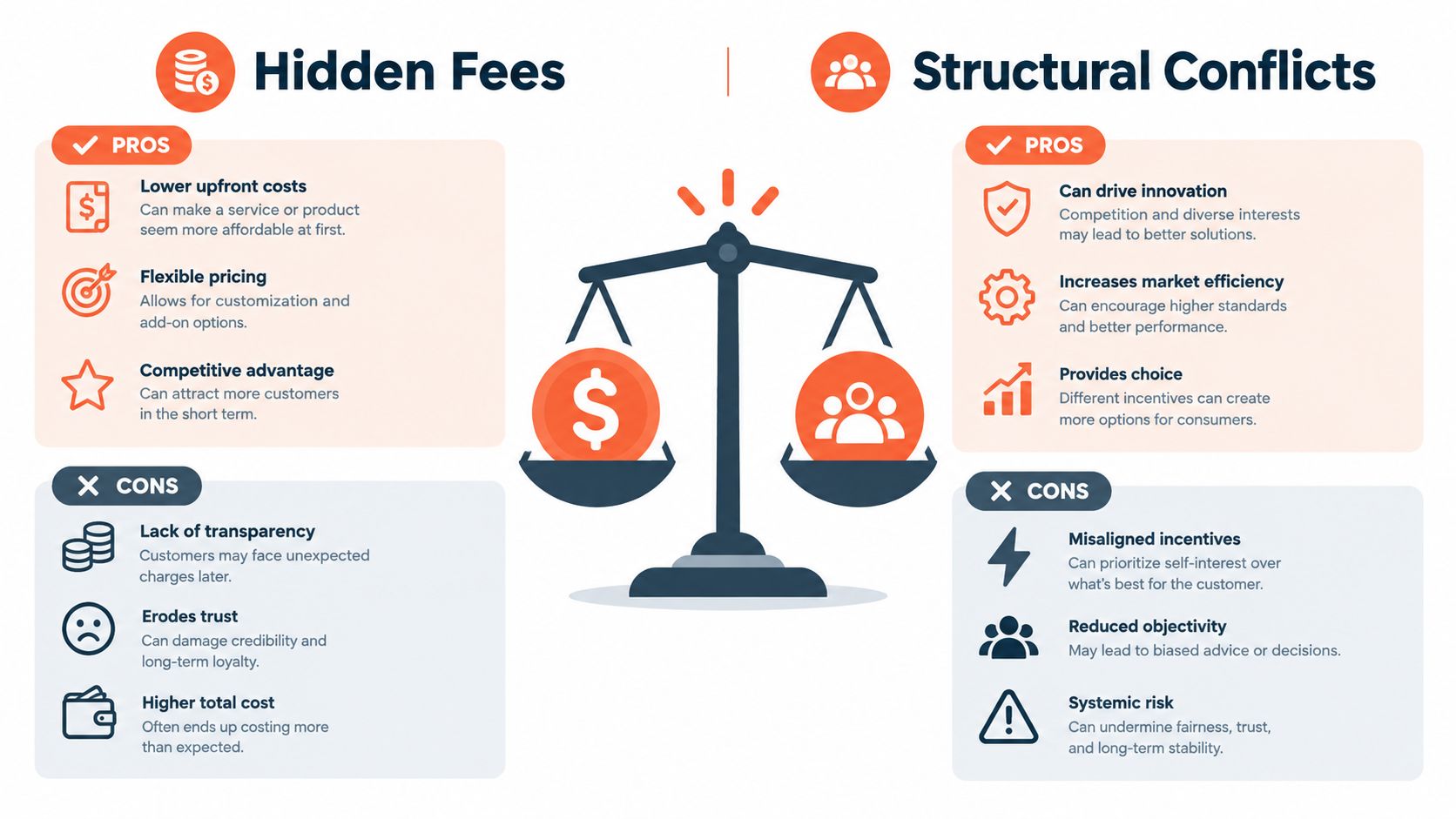
The quoted membership price is rarely the full annual cost. It is the entry fee, not always the price of complete care. That gap matters because a low retainer can still leave patients paying separately for the services that drive most of the bill.
What is usually outside the membership
Recent market coverage places standard programs around $2,000 to $5,000 per year, while mid-tier and ultra-premium offerings can rise to $10,000 to $50,000+ annually once the broader service package is counted. The same reporting notes that labs, imaging, specialist referrals, prescriptions, and hospital care are usually billed outside the membership fee. Concierge Medicine Today’s FAQ on executive health, VIP programs, and concierge medicine is explicit about that boundary.
The hidden-cost problem starts there. Patients often compare the headline retainer across clinics and assume the lower number means the lower total cost. The total cost depends on how much care gets routed outside the membership, and how often those services are recommended.
Where structural conflicts show up
The incentive problem is more structural than cosmetic. When a clinic earns membership revenue and also benefits from extra testing, add-on protocols, or repeated follow-up services, the business model can reward higher service intensity. That does not prove poor care, but it does mean patients should ask who benefits when more diagnostics are ordered.
Longevity Clinics’ conflict-of-interest journal is a useful reference point because it treats incentives as part of the evaluation, not an afterthought. In high-cost membership medicine, a polished promise of simplicity can sit on top of a layered billing structure.
A contract should answer three questions before anyone signs. What is included, what is excluded, and what gets triggered by a physician recommendation. If those answers are vague, the sticker price is doing very little work.
Regional Access and Market Value Mismatches
The value of concierge medicine changes by geography. A fee that feels excessive in one city can look rational in another because the model is not only buying time, it’s buying access to a scarce doctor. The local supply of primary care changes what the retainer purchases.
Rural shortage areas versus affluent urban markets
Recent reporting shows annual fees can range from roughly $1,000 to as high as $50,000, with the broader U.S. market still concentrated in the $2,000 to $5,000 band and some premium practices charging $60,000 yearly plus initiation fees. NPR’s report on concierge membership and physician shortages captures the contrast between scarcity and exclusivity.
In shortage areas, the fee may buy faster access to a physician who would otherwise be hard to reach. In affluent urban markets, the same fee may mainly buy shorter wait times, longer visits, and easier scheduling. That’s a very different value proposition, and the patient needs to know which one applies.
The practical question is not whether concierge medicine is expensive. It’s whether the local alternative is materially worse enough to justify the premium. In some places, the answer is yes because the baseline system is overloaded. In others, the answer is less obvious because the membership mostly replaces inconvenience with convenience.
Why quality is harder to judge by price alone
Higher pricing does not automatically mean better clinical outcomes or broader referral access. A member may get a physician who knows them well, but that doesn’t guarantee faster specialist care, different hospital privileges, or superior treatment results. The fee can improve the experience without changing the underlying medical system around it.
That’s why regional context matters so much. The same membership can function as access insurance in one market and as premium hospitality in another. If you’re evaluating value, compare what the fee buys in your location, not just what it promises in theory.
Evaluating Longevity Programs and Diagnostics
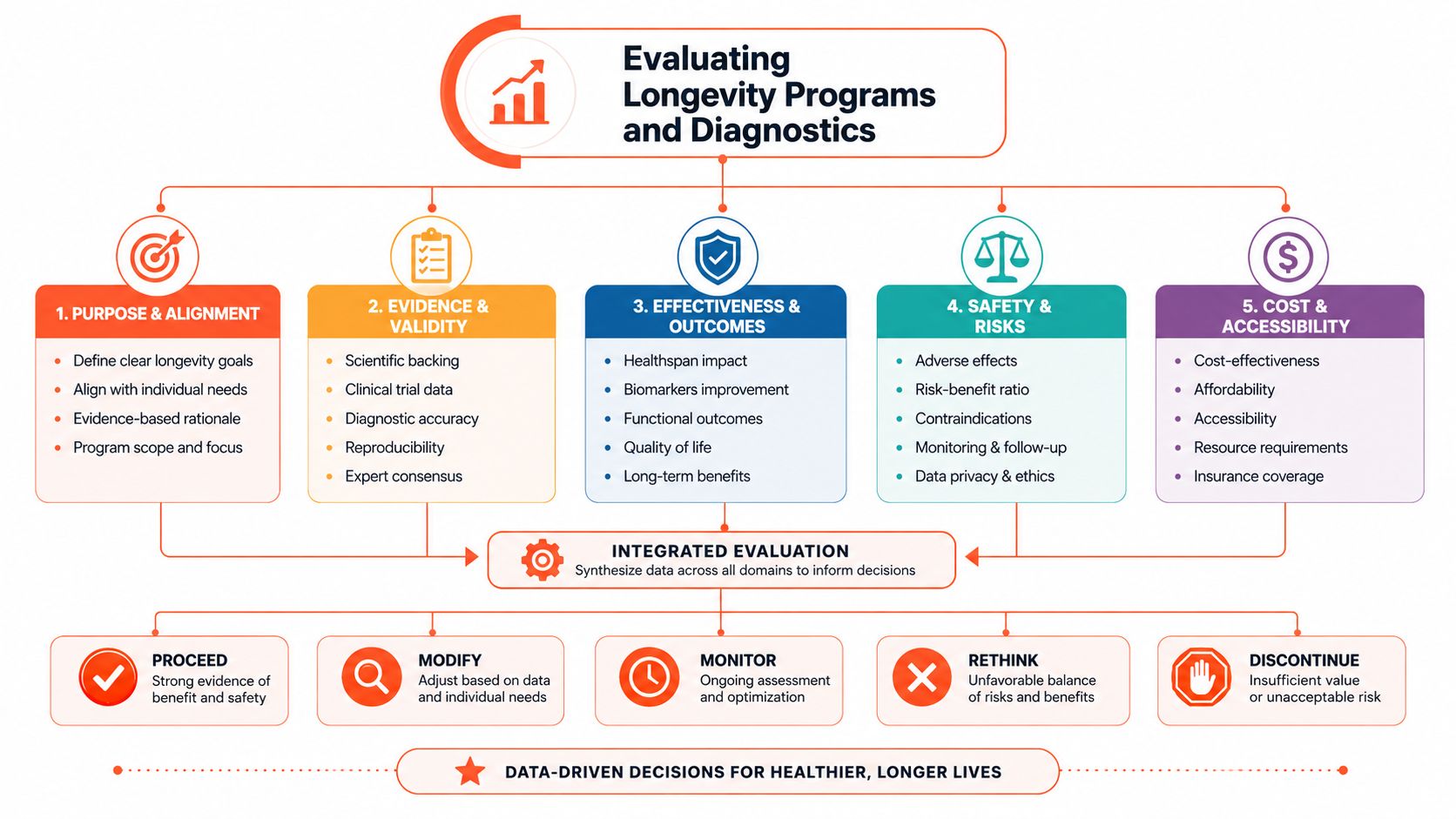
A high retainer is easiest to misread in longevity care because the fee is doing more than paying for visits. It may also cover diagnostics, clinical supervision, and the design of follow-up protocols. The central question is whether the testing stack and oversight are specific enough to justify the total out-of-pocket cost.
A simple audit framework
Start with three checks. What diagnostic workup is included. Who interprets the results, and how often does that review happen. What happens when findings conflict, look borderline, or do not fit the patient’s symptoms.
A long test list does not prove rigor. A credible program should show how each test changes the care plan, the follow-up cadence, or the decision to stop, repeat, or escalate monitoring. If that path is unclear, the clinic may be charging for activity rather than precision.
Use the contract as the first diagnostic tool. If it does not specify what gets tested, how often, and who reviews it, the program is selling confidence before it has earned it.
Longevity Clinics’ 2026 minimum-credible diagnostic article is a useful benchmark for separating a clinically grounded workup from a marketing-led bundle. That matters because premium membership medicine often presents diagnostics as proof of sophistication, while the actual test is whether those diagnostics lead to decisions that can be defended.
How to think about your own break-even point
Break-even is not just a dollar calculation. It also depends on whether the membership reduces wasted time, duplicate visits, and uncoordinated care enough to offset the retainer. Patients with more complex histories usually get more value from strong continuity than patients who only want an occasional check-in.
Longevity-focused patients should ask one more question. Is the clinic clear about experimental or lower-evidence services? If a service is presented as advanced but the evidence is thin, the premium is partly paying for uncertainty. That may be acceptable, but only if the clinic labels it plainly.
One editorial tool helps compare these programs: Longevity Clinics’ profiles and scoring across diagnostic depth, supervision, conflict freedom, and evidence base. That makes it easier to compare membership-style models without relying on marketing language alone. The point is not to chase the highest score. It is to see where the fee goes.
Matching Patient Profiles to the Right Model
The right concierge model depends on what problem you’re trying to solve. Some people need continuity, some need access, and some need intensive diagnostics. The mistake is paying for a luxury structure when the actual need is simpler.
Which profile fits which tier
If you’re a busy professional who mainly wants faster scheduling, more time with a doctor, and a smoother primary care experience, a hybrid or classic entry model may be enough. If you manage multiple chronic conditions or want a doctor who can keep a close eye on changing needs, the tighter-panel established classic tier is often a better fit. If you’re seeking highly individualized oversight, frequent touchpoints, and the smallest practical panel, the luxury tier is the clearest match.
For older adults with chronic disease burden, the value proposition rests less on luxury and more on continuity. A smaller panel can make medication review, referral coordination, and symptom follow-up more realistic. For health-conscious patients who want broad diagnostics but don’t need constant contact, the right model is often one with transparent testing and clear billing, not just the highest fee.
Questions that should shape the decision
Ask each prospective physician the same set of questions.
- What exactly is included in the annual fee? Get the answer in writing, especially for labs, imaging, referrals, and after-hours access.
- How many patients are in the panel? That number is more informative than the marketing label.
- What gets billed separately? The true cost often sits there.
- Who coordinates specialist care? A membership is weaker if it doesn’t improve handoffs.
- What happens when a problem exceeds primary care? You need to know where the membership stops.
If a clinic can’t describe its billing model plainly, assume the real cost is higher than the brochure suggests.
A final filter is local fit. The same fee can be good value in a region with long wait times and scarce primary care, but only modest value in a market where access is already decent. The best decision is usually the one that matches your health risk, your tolerance for friction, and your actual need for physician time, not the one with the fanciest pitch.
If you’re comparing concierge medicine programs now, build your shortlist around contract clarity, panel size, and what gets billed outside the retainer. Then request a written fee schedule from each practice and compare the total expected annual spend, not just the membership line.