Metabolic Health Clinic: What to Look For
Evaluating a metabolic health clinic? Learn which diagnostics, interventions, and follow-up metrics separate evidence-based care from expensive marketing.
A high-cost metabolic health clinic can impress you before it helps you. The consultation may include extensive bloodwork, continuous glucose monitoring, body-composition analysis, supplements, and a prescription pathway for a GLP-1 medication. Yet the central audit question is simpler: who remains responsible for your care after the first appointment?
Rigorous testing has value only when it changes a decision, improves monitoring, or triggers appropriate escalation. A programme that identifies risk but doesn’t manage it over time may be offering an expensive snapshot rather than medical care. The strongest evidence instead supports sustained attention to weight, activity, glucose, blood pressure, lipids, medication safety, and access.
Table of Contents
- Redefining Value in Metabolic Care
- The Core Conditions Targeted by Metabolic Programmes
- Auditing Diagnostic Depth and Screening Pathways
- Evaluating Intervention Strategies and Lifestyle Evidence
- The Missing Link in GLP-1 Medication Management
- Calculating the True Cost and Access Equity
- A Framework for Scoring Clinic Quality
Redefining Value in Metabolic Care
The most persistent marketing assumption is that a longer test menu produces better health outcomes. That assumption confuses diagnostic novelty with clinical value. A proprietary “metabolic age” score may look more advanced than a standard laboratory pathway, but a clinic still has to explain what the result means, what action follows, and how the outcome will be measured.
A more defensible definition of value starts with ordinary problems. Does the programme identify diabetes risk accurately? Does it address weight and activity with a structured plan? Does it monitor blood pressure and lipids? Does a qualified clinician review worsening results and coordinate care with primary care or endocrinology?
Audit principle: A test is clinically useful when it changes management, not merely when it adds detail to a report.
The global context makes this distinction important. In November 2024, the World Health Organization reported that more than 800 million adults worldwide were living with diabetes, and that adult prevalence had risen from approximately 7% in 1990 to 14% in 2022. This is not a narrow wellness concern. It is a large-scale disease-management problem requiring prevention, diagnosis, treatment, and continuity.
What a credible programme should own
A credible metabolic health clinic should make its responsibilities explicit:
- Risk classification: Use validated tests and explain abnormal results in clinical context.
- Intervention design: Provide specific nutrition, activity, behavioural, and medication strategies.
- Follow-up: Set review points before treatment begins, rather than leaving monitoring to the patient.
- Escalation: Define when another clinician, specialist, or urgent service becomes necessary.
- Outcome reporting: Track changes that matter, including weight, waist circumference, glycaemia, adherence, adverse effects, and retention.
This standard doesn’t reject advanced diagnostics. It places them in the right order. A clinic that offers fewer tests but reliable follow-up may provide more meaningful care than one that generates a detailed report and then transfers responsibility back to the patient.
The Core Conditions Targeted by Metabolic Programmes
Metabolic programmes generally address a cluster of related risks rather than one isolated diagnosis. Insulin resistance, excess adiposity, dyslipidemia, abnormal glucose regulation, hypertension, and metabolic-associated liver disease can reinforce one another. A useful clinic therefore treats the patient’s risk profile as connected, while still avoiding the mistake of reducing every abnormality to a single “metabolic score.”
Insulin resistance may precede overt diabetes, but the practical clinical question is not whether a clinic can describe a mechanism in polished language. It’s whether the team can identify established risk, recommend an appropriate intervention, and monitor whether that intervention works. The same applies to fatty liver disease, lipid abnormalities, and obesity. These conditions require interpretation alongside medication history, family history, physical findings, and existing diagnoses.
The scale of diabetes shows why foundational management deserves priority. The WHO report states that nearly 450 million adults aged 30 and older, approximately 59% of adults with diabetes, weren’t receiving glucose-lowering medication in 2022. Approximately 90% of untreated adults lived in low- and middle-income countries. In the South-East Asia and Eastern Mediterranean regions, adult diabetes prevalence was approximately 20%, while fewer than four in ten adults with diabetes in those regions and the African Region were taking glucose-lowering medication.
Why the common conditions matter most
These figures change how a buyer should judge a private programme. A clinic’s relevance isn’t established by its ability to identify rare biological patterns. It’s established by whether it can manage the risks that affect a very large patient population.
- Glucose dysregulation: The clinic should distinguish normal glucose regulation from prediabetes and diabetes, then arrange appropriate follow-up.
- Excess weight and central adiposity: The programme should measure change over time and address regain, adherence, and physical function.
- Dyslipidemia: Lipid findings should feed into cardiovascular risk management, not sit in a decorative laboratory dashboard.
- Liver risk: Suspected metabolic-associated liver disease should lead to appropriate clinical assessment rather than a vague wellness label.
- Blood pressure: A metabolic plan that ignores blood-pressure control is incomplete, even if it includes advanced biomarker testing.
The treatment gap also exposes a major ethical issue. A premium clinic can offer excellent diagnostics to people who can reach and afford it, while many people with substantial untreated risk lack basic access to medication and preventive support. Clinical sophistication shouldn’t become a substitute for access, continuity, or evidence-based management.
Auditing Diagnostic Depth and Screening Pathways
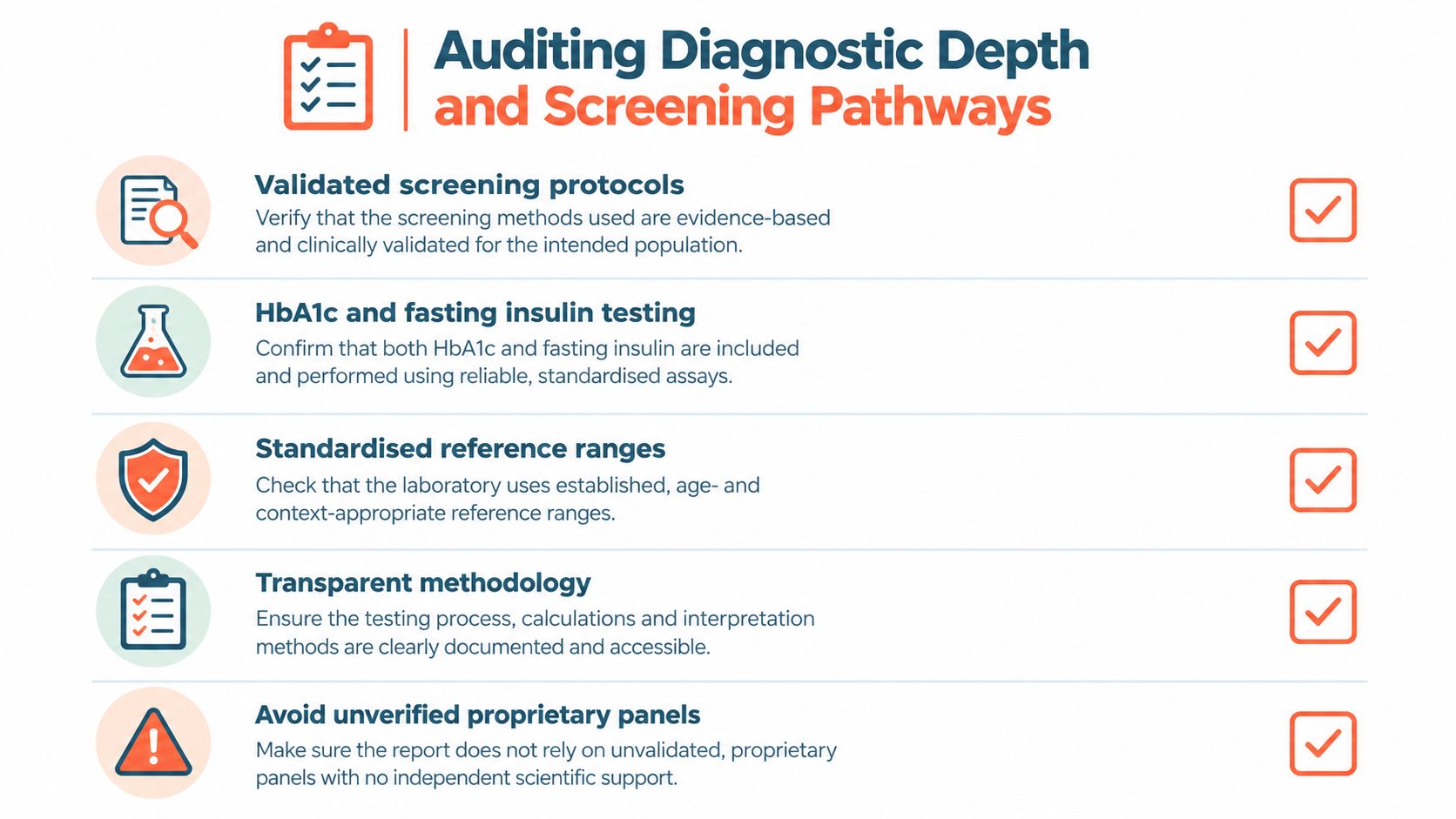
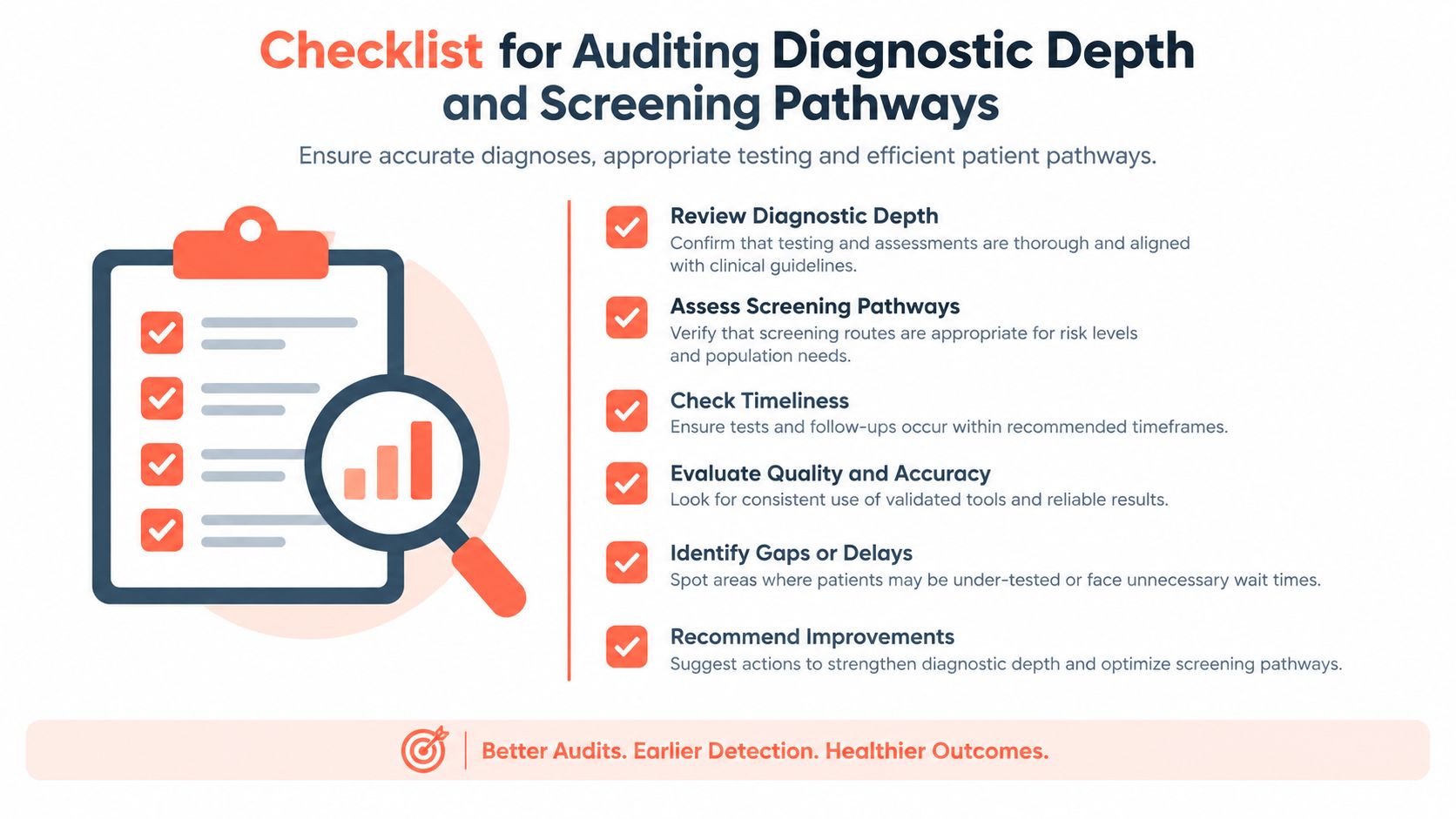
Start with the clinic’s first-line pathway, not its most unusual test. For asymptomatic adults aged 35 to 70 with overweight or obesity, the U.S. Preventive Services Task Force recommends screening for prediabetes and type 2 diabetes and referring people with prediabetes to effective preventive interventions.
The accepted first-line options are HbA1c, fasting plasma glucose, and a 75-gram oral glucose-tolerance test. The OGTT measures plasma glucose two hours after the glucose load. A clinic doesn’t need to use every test for every patient, but it should explain why it selected a test and how it will handle an abnormal result.
The thresholds that should be visible
A technically credible programme should be able to state its diagnostic thresholds clearly:
- Prediabetes: HbA1c of 5.7% to 6.4%, or fasting glucose of 100 to 125 mg/dL, equivalent to 5.6 to 6.9 mmol/L.
- Diabetes: HbA1c of at least 6.5%, fasting glucose of at least 126 mg/dL, equivalent to 7.0 mmol/L, or two-hour OGTT glucose of at least 200 mg/dL, equivalent to 11.1 mmol/L.
Each quantitative threshold is drawn from the USPSTF screening recommendation. The clinic should also document the assay method, fasting status, relevant medications, and whether an abnormal result requires confirmation before a diagnosis is assigned.
Normal results don’t eliminate future risk. The USPSTF framework says screening can reasonably recur every three years when results are normal, with shorter intervals when weight, medication exposure, family history, ethnicity, or prior glycaemic trends increase concern. That interval isn’t a promise that every patient needs the same schedule. It’s a test of whether the clinic has a rational monitoring policy.
Questions to ask before paying
Ask the clinician:
- Which results are validated for diagnosing or classifying disease risk?
- Which measurements are exploratory or proprietary?
- What happens after an abnormal finding?
- Who confirms a diagnosis?
- Who communicates with your existing doctor?
- What triggers referral to endocrinology or another specialist?
A clinic can use additional markers, continuous glucose monitoring, or body-composition tools as adjuncts. Those tools shouldn’t replace validated glycaemic screening or create the impression that a proprietary score is itself a diagnosis. Readers comparing laboratory standards can also review this minimum credible diagnostic framework before a consultation.
Evaluating Intervention Strategies and Lifestyle Evidence
The strongest benchmark for a metabolic health clinic isn’t the number of supplements in a protocol. It’s whether the programme produces and sustains changes linked to lower disease risk. The historical reference point remains the U.S. Diabetes Prevention Program, where adults at high risk of type 2 diabetes followed an intensive lifestyle programme focused on modest weight loss, healthier eating, and increased physical activity.
The CDC’s account of the National Diabetes Prevention Program describes a 58% reduction in the risk of developing diabetes over approximately three years compared with placebo. The programme targeted 5% to 7% weight reduction, not an extreme transformation. Among participants older than 60, the reduction reached 71%. Long-term follow-up found that lifestyle participants remained about one-third less likely to develop type 2 diabetes a decade later, while those who eventually developed it delayed onset by approximately four years.
These findings don’t mean every private programme will reproduce the trial. They do establish what a serious intervention should measure.
What the programme should specify
A clinic’s lifestyle plan should answer practical questions rather than rely on motivational language:
- Nutrition: Is there a documented calorie and dietary strategy suited to the patient’s health status and preferences?
- Activity: Does the programme set progressive physical-activity targets?
- Behaviour: Who provides coaching, and how does the team address missed sessions, stress, sleep, or regain?
- Monitoring: When are weight, waist circumference, glucose measures, adherence, and adverse events reviewed?
- Adjustment: What changes when the initial plan stops working?
The USPSTF supporting evidence reports that each kilogram of weight loss in the Diabetes Prevention Program was associated with a 16% reduction in diabetes risk after adjustment for diet and physical activity. That association doesn’t turn weight into the only meaningful outcome. It does show why a clinic should report weight change alongside glycaemia, activity exposure, safety, and retention.
A medication-led plan may produce faster visible change, but speed doesn’t answer whether the patient can maintain the result, preserve physical function, manage adverse effects, or continue treatment safely. Conversely, lifestyle care shouldn’t be sold as effortless or sufficient for every patient. The audit standard is neither anti-medication nor anti-technology. It’s whether the clinic combines appropriate tools with a measurable, revisable care process.
The Missing Link in GLP-1 Medication Management
Prescribing a GLP-1 medication is an event. Managing the patient who takes it is a continuing clinical responsibility. Many programmes make access appear to be the product, while leaving unanswered who handles titration, gastrointestinal symptoms, nutrition, resistance training, mental health, cardiometabolic targets, and eventual continuation or discontinuation.
Recent US reporting describes obesity care as fragmented, without a consistently accountable clinician or department, while pharmacists increasingly coordinate access, titration, monitoring, and prior-authorization appeals. The reported analysis of obesity-care ownership makes the operational gap difficult to ignore. A patient may receive a prescription quickly, yet still lack one person who can see the full clinical picture.
The ownership test
A responsible clinic should identify the named professional or team accountable for:
- Reviewing dose tolerance and deciding whether titration is appropriate.
- Monitoring gastrointestinal and other adverse effects.
- Checking whether nutrition and protein intake support safe weight reduction.
- Incorporating resistance training and physical-function goals.
- Reviewing mental health and medication-related concerns.
- Reassessing glucose, blood pressure, lipids, and other relevant targets.
- Managing plateaus, interruptions, shortages, coverage changes, and discontinuation.
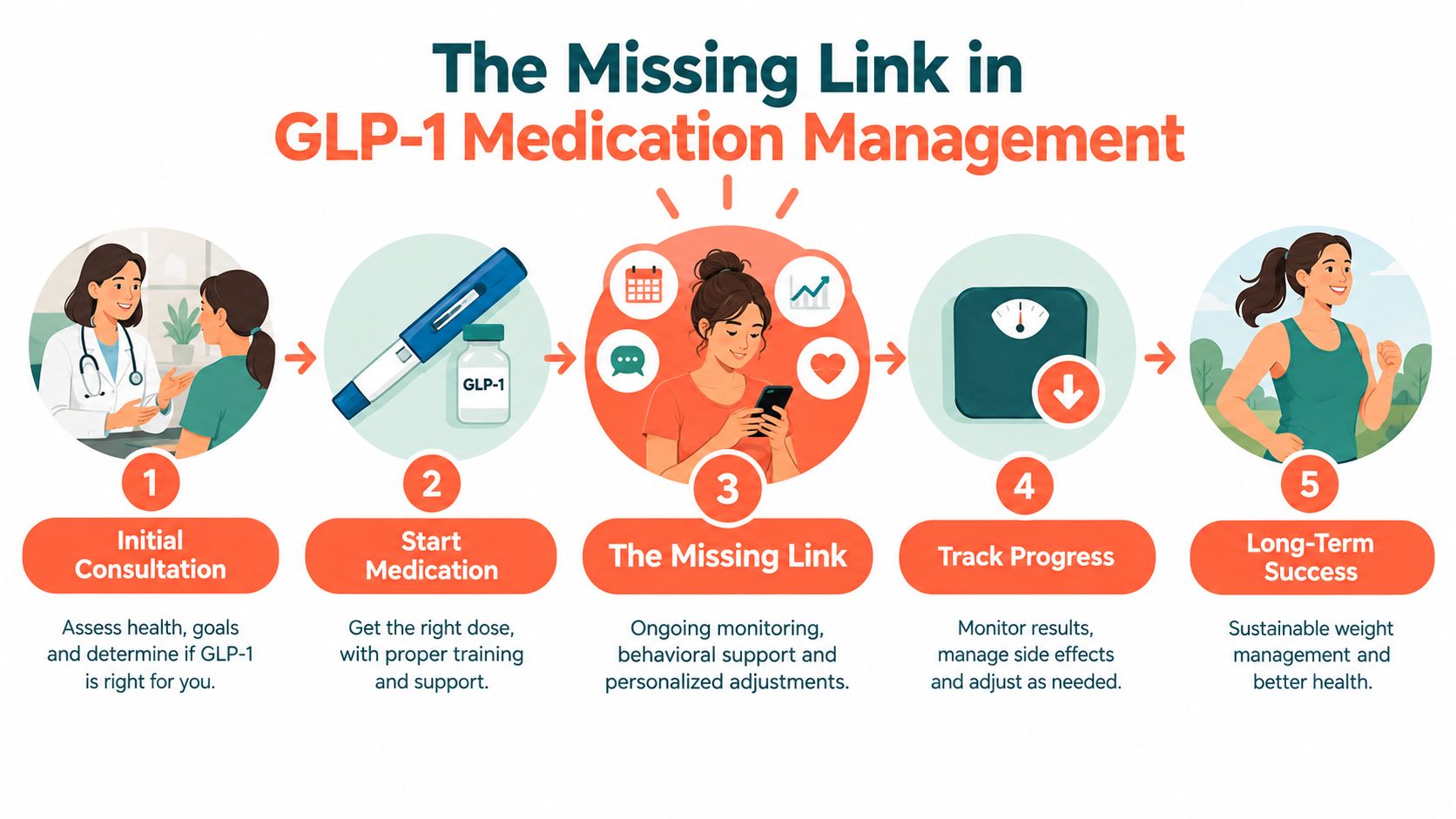
The WHO guidance on GLP-1 therapies recommends GLP-1 treatment as potentially long-term therapy and conditionally recommends combining it with intensive behavioural therapy. It also identifies limited long-term data, cost, equity, health-system readiness, and patient priorities as important considerations. That combination should make buyers cautious about clinics that frame medication as a complete programme.
Practical rule: Before accepting a prescription, ask who will call you when a side effect appears, who will review your progress when weight plateaus, and what the written exit plan says.
The most revealing question is often what happens if the patient wants to stop. A clinic that can describe continuation but not discontinuation hasn’t demonstrated longitudinal ownership. A smaller programme with regular multidisciplinary reviews may be safer and more durable than a medication-centred service built around prescription availability and initial weight-loss claims.
Calculating the True Cost and Access Equity
The advertised programme price is rarely the full financial commitment. A patient may also face consultations, laboratory charges, body-composition assessments, supplements, dietetic input, exercise coaching, medication changes, and costs created by interrupted coverage. The financial audit should therefore ask not only, “Can I start?” but also, “Can I continue if the original payment route fails?”
A 2026 analysis of anti-obesity medication access and pricing reported that only 42.8% of first-time prescriptions were dispensed within 60 days and estimated US GLP-1 list prices at roughly $13,600 to $17,600 per year. Those figures don’t predict an individual’s payment, coverage, or clinical response. They do show why a prescription pathway can fail administratively even after a clinician approves treatment.
| Cost Category | Frequency | Impact on Continuity |
|---|---|---|
| Medication | Ongoing or subject to coverage changes | An interruption can disrupt treatment and follow-up planning |
| Laboratory testing | At baseline and during review | Unexpected charges may lead patients to skip monitoring |
| Clinical consultations | Scheduled and as-needed | Sparse access can leave adverse effects or plateaus unmanaged |
| Nutrition and exercise support | Programme-dependent | Removing support may weaken sustainable behaviour change |
| Supplements and add-ons | Often optional or recurring | Bundled recommendations can obscure the essential cost |
| Discontinuation planning | Usually overlooked | An unsupported stop can create clinical and financial uncertainty |
The equity question
Access is shaped by income, insurance, geography, supply, and administrative friction. The WHO discussion of GLP-1 access identifies high costs, limited production capacity, supply constraints, and unequal access as barriers to wider treatment. The American Medical Association’s policy position has called for equitable access to structured lifestyle programmes across community, digital, hybrid, and safety-net settings.
Before signing, request the self-pay assumptions, continuation charges, cancellation rules, laboratory fees, medication alternatives, and lower-cost referral routes in writing. A clinic’s value falls sharply when its protocol works only while every financial and administrative condition remains favourable. Readers assessing broader concierge models can compare these questions with this analysis of concierge medicine costs.
A Framework for Scoring Clinic Quality
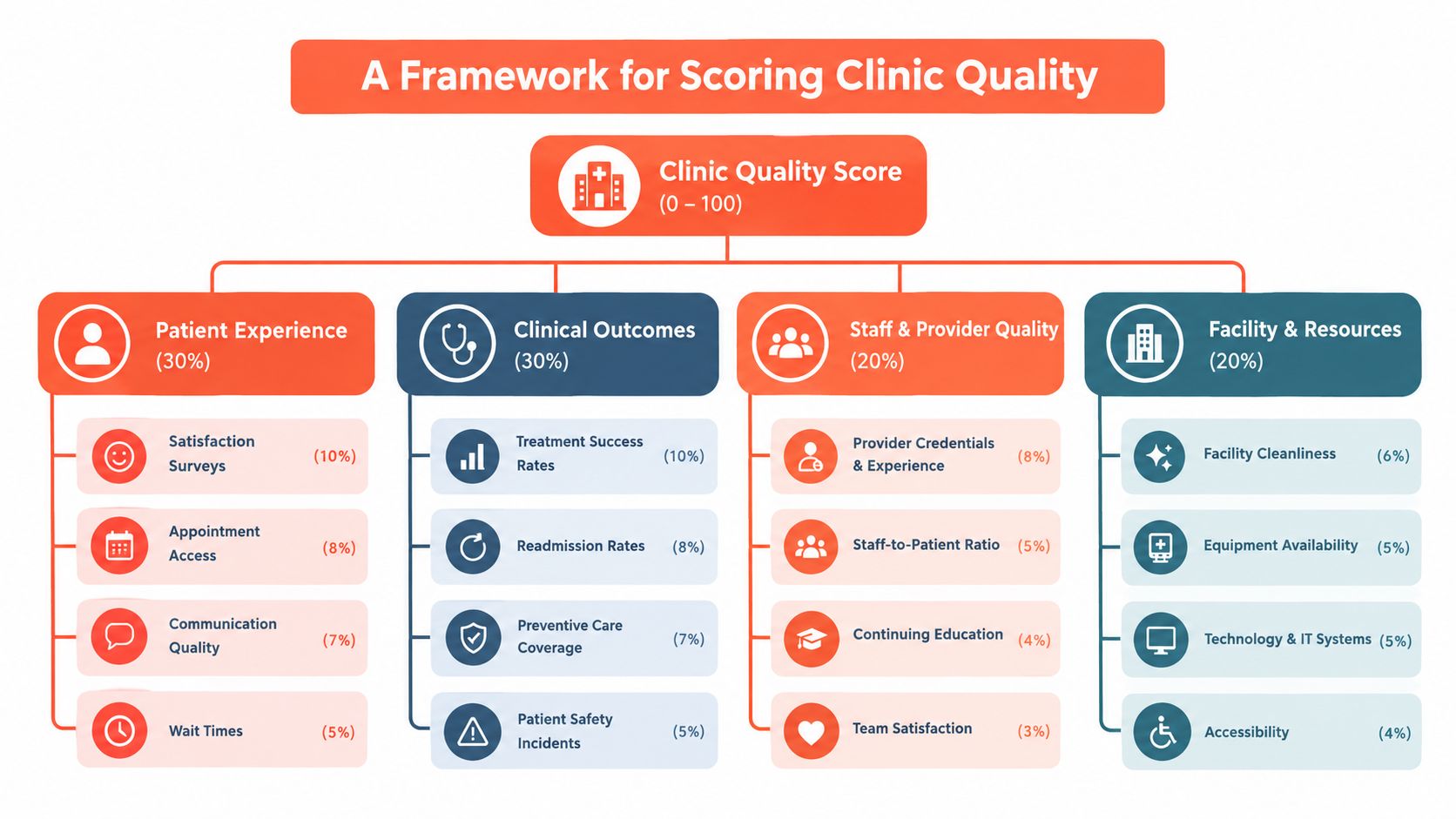
A useful comparison separates what the clinic measures from what it manages. Score each programme across four axes, using the same questions for every provider. The point isn’t to create false precision. It’s to prevent a polished consultation, a large test panel, or a medication offer from dominating the decision.
Diagnostic depth
Give credit for validated screening, transparent laboratory methods, clinically interpretable reference ranges, confirmation of abnormal results, and a defined referral route. Treat proprietary scores as supplementary unless the clinic can explain their validation and effect on management.
Medical supervision
Look for named clinicians, clear review intervals, medication titration rules, adverse-effect monitoring, and documented responsibility after the initial visit. Ask whether the programme monitors weight, waist circumference, glucose, activity, adherence, safety, and relevant cardiometabolic targets.
Conflict freedom
Identify who profits from the recommended intervention. Does the clinic sell supplements, dispense medication, own the laboratory, or receive referral income? These arrangements don’t automatically invalidate care, but they should be disclosed so the patient can judge whether recommendations remain independent.
Evidence base
Separate established screening and prevention methods from experimental measurements. A serious programme should explain what evidence supports each intervention, what remains uncertain, and how it will respond if the patient doesn’t improve.
Longevity Clinics is one example of a comparison resource that publishes clinic profiles using a composite score across diagnostic depth, medical supervision, conflict freedom, and evidence base, alongside format and geographic context. Readers can also review its discussion of longevity medicine as a broader framework for assessing private programmes.
Decision rule: Choose the clinic that can show who owns the next decision, not the clinic that offers the most impressive first appointment.
A high-quality metabolic health clinic should leave you with a written baseline, a defined intervention, named clinical responsibility, measurable outcomes, escalation criteria, and a realistic cost pathway. Before paying a deposit, ask the clinic to provide those details in writing, compare them against another provider, and decline any programme that cannot explain what happens after the initial test or prescription.
If you’re evaluating a metabolic health clinic, request its screening pathway, follow-up schedule, GLP-1 management plan, complete cost assumptions, and escalation policy before enrolling. Use those documents to compare providers on continuity and measurable outcomes, not on the size of the test panel.